


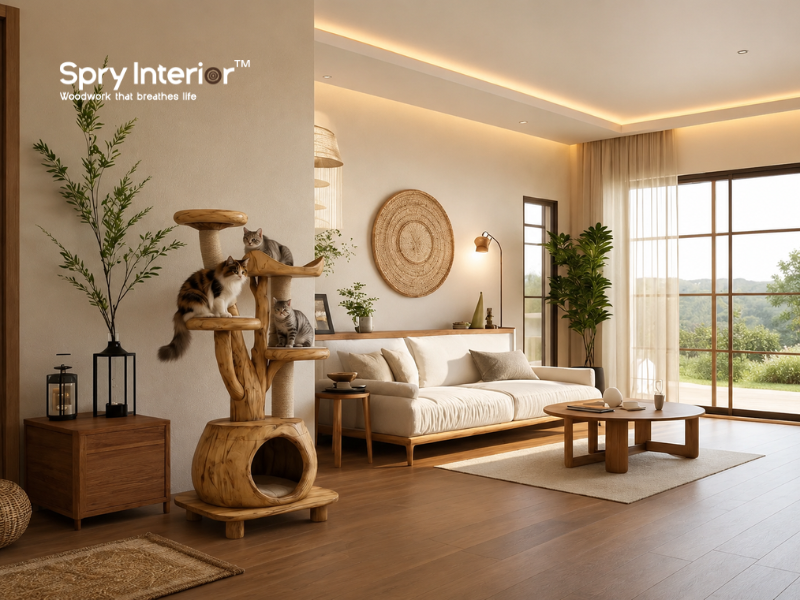
A cat tree small footprint design gives indoor cats valuable climbing, scratching, and resting space without overwhelming a compact home. For apartment dwellers and homeowners with limited floor area, traditional cat towers can feel bulky, visually heavy, and difficult to place. A narrow vertical structure solves that problem by using height instead of width, creating an enriching environment for cats while preserving room for people and furniture.
Cats naturally seek elevated places where they can observe their surroundings, rest without interruption, and feel secure. A thoughtfully designed compact cat tree can provide several levels of activity within the floor space of a small side table. It may include climbing platforms, scratching areas, cushioned perches, and private resting zones, all arranged vertically.
The right design should do more than save space. It should remain stable, suit the cat’s age and size, and coordinate with the interior. By considering measurements, platform spacing, materials, and placement, pet owners can create a comfortable feline retreat that feels intentional within the home.
1. Why Compact Cat Trees Work Well in Small Homes
Vertical Space Creates More Room for Cats
In a small apartment, floor space may be limited, but vertical space is often underused. A tall, narrow cat tree takes advantage of that open area by stacking several activity zones above one another.
Instead of placing separate beds, scratching posts, and climbing toys throughout the room, owners can combine these features into one structure. A cat may scratch near the base, climb through the middle levels, and sleep on the highest perch.

Buy Now: Rustic Tree Cat Tower Home Office
This vertical arrangement can make a home feel less cluttered while giving cats more usable territory. It is particularly beneficial in studio apartments, bedrooms, home offices, and compact living rooms where every square foot matters.
Elevated Perches Support Natural Behavior
Cats often feel safest when they can observe the room from above. An elevated perch provides a comfortable place to watch household activity, look through a window, or rest away from children and other pets.
Height can also help reduce tension in multi-cat households. When several platforms are available, each cat can choose a preferred level instead of competing for one windowsill or chair.
A compact tree should provide enough distance between platforms for comfortable climbing without requiring extreme jumps. Younger cats may enjoy greater vertical challenges, while seniors often need closer steps and wider landing areas.
Benefits of a Space-Saving Cat Tree
- Uses vertical space instead of valuable floor area
- Combines climbing, resting, and scratching functions
- Gives indoor cats a secure observation point
- Helps reduce climbing on shelves and furniture
- Supports exercise within a compact environment
- Creates separate resting levels for multiple cats
- Fits more easily beside windows, sofas, or desks
A slim cat tree can offer substantial enrichment while remaining practical for homes where oversized pet furniture is not an option.
2. Choosing the Right Design for a Compact Room
Features to Look for Before Buying
- A weighted or wide enough base for reliable stability
- Platforms that support the cat’s entire body
- Durable scratching surfaces at comfortable heights
- Smooth edges and securely covered hardware
- Closely spaced levels for kittens or senior cats
- Removable cushions that are easy to clean
- A structure sized appropriately for the room
These features are especially important when comparing the best cat tree for small apartment living. A product may have narrow dimensions, but it still needs to provide safe movement and comfortable resting areas.
Measure the Available Floor and Wall Space
Before ordering a cat tree, measure the exact location where it will be placed. Record the available width, depth, and ceiling height, then check for baseboards, vents, outlets, curtains, and nearby furniture.

The base must fit completely on a flat surface. It should not extend into a doorway or narrow a major walking path. Owners should also consider the cat’s jumping route. A platform positioned too close to a fragile lamp, shelf, or television may encourage unsafe movement.
Use painter’s tape to mark the base dimensions on the floor. This makes it easier to visualize how much room the structure will occupy and whether people can move comfortably around it.
If the design includes wall anchoring, confirm that the installation location has suitable studs or hardware support.
Match the Tree to the Cat’s Size and Age
Compact does not mean miniature. Large or heavy cats need platforms wide enough to support their bodies and a base strong enough to resist movement during climbing.
Kittens may use narrow branches and closely spaced platforms easily, but adult cats often need broader landing areas. Senior cats may benefit from gradual climbing routes, lower resting zones, and textured surfaces that provide traction.
Owners should also observe how their cats currently use the home. A cat that prefers sleeping on top of cabinets may appreciate a tall lookout platform, while one that hides beneath furniture may use an enclosed lower bed more frequently.
The most suitable tree reflects the cat’s actual habits rather than relying only on appearance.
3. Integrating a Tall Cat Tree Into Your Interior
Choose a Furniture-Like Design
Traditional carpet-covered towers may be functional, but they can look visually heavy in small rooms. Wood construction, neutral cushions, and sculptural forms help a cat tree feel more like intentional furniture.

Buy Now: Natural Solid Wood Cat Tree Cat House Gift Cat
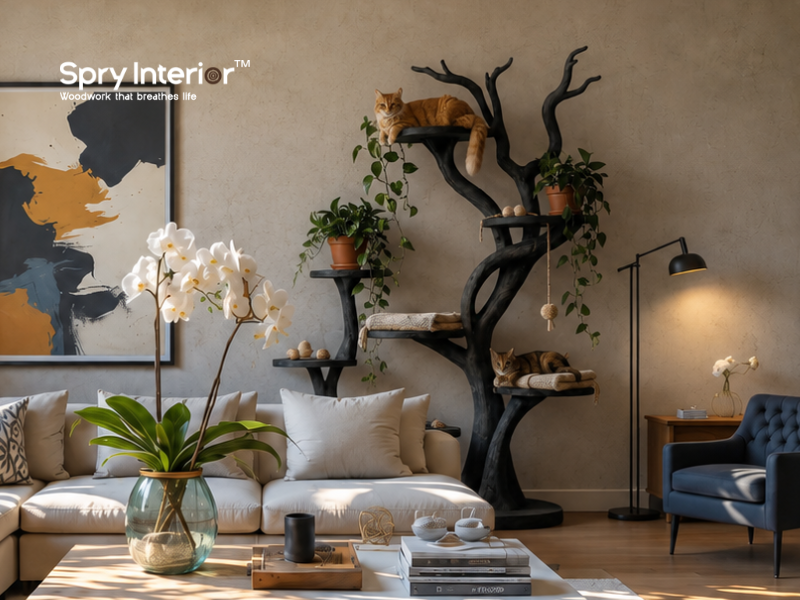
A cat tree that looks like a tree can add organic movement to the interior through branch-inspired supports, irregular platforms, and natural wood grain. This style works especially well in rooms with plants, wooden furniture, woven textiles, and neutral colors.
The finish does not need to match every piece of furniture exactly. Complementary wood tones often create a more natural, collected appearance. Repeating the color through frames, shelves, or decorative bowls can help the structure feel connected to the room.
Placement Ideas for Small Spaces
- Position the tree beside a window for outdoor viewing.
- Use an empty corner near the living-room sofa.
- Place it beside a desk in a home office.
- Keep it near family activity to encourage regular use.
- Avoid blocking vents, doors, and window treatments.
- Leave clear space around jumping and landing areas.
- Keep fragile objects away from nearby shelves.
The most effective tall cat trees for small spaces use height while maintaining a narrow, stable base. Placement near a wall or corner can reduce visual obstruction, but the structure should still allow access to all climbing routes.
Keep the Area Visually Uncluttered
A tall cat tree already creates a strong vertical feature, so the surrounding area should remain relatively simple. Avoid crowding it with floor lamps, unstable planters, decorative ladders, or small tables.
Leaving open space around the base improves both safety and appearance. It also makes cleaning easier, particularly when fur, litter, or scratching debris collects nearby.
A simple washable rug beneath the tree can define the pet zone and protect flooring. Nearby storage baskets may hold toys and grooming supplies, but they should not interfere with the cat’s movement.

Thoughtful styling helps the cat tree contribute to the room rather than making the space feel smaller.
4. Why Choose SpryInterior for a Compact Cat Tree?
Sculptural Design Meets Everyday Function
SpryInterior approaches cat furniture as part of the home rather than as equipment that needs to be hidden. Its tree-inspired designs combine climbing platforms, resting areas, scratching opportunities, and natural forms within one visually distinctive structure.
This approach is particularly valuable in smaller homes. When a cat tree tower occupies a visible living area, its appearance matters almost as much as its function. A furniture-like design allows owners to place it where cats will use it most without compromising the room’s overall style.
The organic silhouette can soften rooms dominated by straight lines, while natural wood tones bring warmth to painted walls, metal fixtures, and modern upholstery.
Designed for Shared Living Spaces
Cats usually want to remain near household activity, even when resting. A well-designed tree can sit beside a sofa, near a window, or in a home office, allowing the cat to participate from its own elevated territory.
SpryInterior’s sculptural approach can make this shared arrangement feel more intentional. Instead of pushing pet furniture into an unused room, owners can integrate it into the main interior.
A dedicated climbing structure may also redirect behavior away from bookshelves, curtains, counters, and other household surfaces. When the tree offers appealing height, texture, and comfort, it becomes a more attractive destination.
Reasons to Consider SpryInterior
- Tree-inspired forms create a sculptural appearance.
- Vertical designs make better use of limited floor space.
- Natural wood tones complement many interior styles.
- Multiple levels support climbing, observation, and rest.
- Integrated scratching zones encourage healthy behavior.
- Furniture-like construction suits visible living areas.
- Distinctive design creates value for cats and homeowners.
Choosing SpryInterior allows pet owners to provide meaningful enrichment while maintaining a warm, thoughtfully designed home. The result is not simply a narrow cat tower, but a functional feature that respects both feline instincts and human living space.

Leave a comment
This site is protected by hCaptcha and the hCaptcha Privacy Policy and Terms of Service apply.