


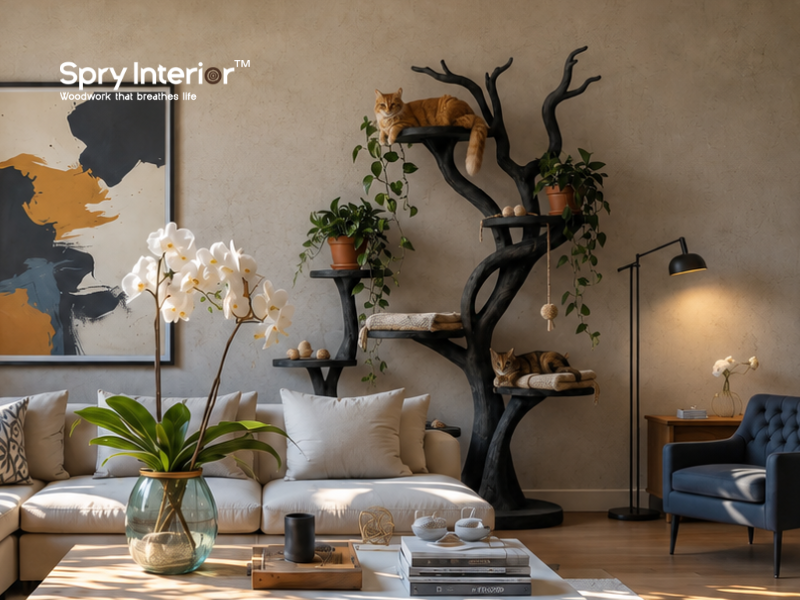
A large wooden cat tree gives indoor cats the height, movement, and private resting spaces they naturally seek while providing owners with a more attractive alternative to bulky carpet-covered towers. Designed with multiple platforms, climbing routes, scratching surfaces, and elevated beds, a substantial cat tree can support exercise, reduce boredom, and help cats feel secure within the home.
The best designs balance feline behavior with interior style. They provide enough vertical territory for climbing and observation without making the living room feel like a pet store. Natural wood, organic shapes, and thoughtfully arranged branches can help the structure blend with modern furniture while still offering a stimulating environment for one or several cats.
Before choosing a cat tree, homeowners should consider available floor space, ceiling height, stability, cat size, and preferred activities. A well-designed structure should feel secure under movement, remain easy to maintain, and offer enough variety to keep cats interested over time.
1. Why a Large Wooden Cat Tree Benefits Indoor Cats
Vertical Space Supports Natural Behavior
Cats instinctively seek elevated positions because height helps them observe their surroundings and feel protected. In a home, the top platform of a cat tree can become a comfortable lookout point where a cat watches family activity, outdoor birds, or other pets from a safe distance.
Vertical territory is particularly valuable in smaller homes where horizontal floor space is limited. Instead of adding several beds and scratching posts across the room, one tall structure can combine multiple functions within a compact footprint.

Buy Now: Custom Handmade Wooden Cat Tree Modern Large Climbing Tree Unique
Height can also reduce tension in multi-cat households. When several platforms are available, cats can choose separate resting levels instead of competing for one preferred chair, windowsill, or shelf.
Benefits for Exercise and Enrichment
- Encourages jumping, climbing, stretching, and balancing
- Provides elevated resting areas for security
- Helps indoor cats release physical energy
- Creates scratching zones away from household furniture
- Offers multiple routes for exploration and play
- Supports mental stimulation through changing viewpoints
- Gives multiple cats more personal territory
A carefully planned cat tree can help transform passive indoor time into regular movement. Even cats that do not engage in intense play may climb between levels several times each day, supporting strength, flexibility, and coordination.
A Dedicated Place for Rest and Privacy
Cats often move between social interaction and private rest throughout the day. A large cat tree gives them several options, from open platforms where they can remain near the family to enclosed spaces where they can retreat.
Older cats may prefer broad lower platforms, while younger cats often enjoy higher perches and more challenging routes. A design with varied levels can accommodate changing needs as a cat matures.
Placement also influences how often the structure is used. Cats are more likely to enjoy a tree located near family activity, a sunny window, or a familiar sleeping area than one hidden in an isolated room.
2. Choosing the Right Design for Your Home and Cats
Consider Size, Weight, and Activity Level
Not every tall cat tree is suitable for every cat. Large breeds and heavier adult cats need wider platforms, stronger connections, and a stable base that will not shift during jumping. Smaller cats may be comfortable on narrower perches, but they still benefit from secure surfaces and easy routes between levels.
Measure both the intended floor area and the height of the room before purchasing. Check for nearby ceiling fans, shelves, curtains, and doors that may interfere with the structure or tempt the cat to jump into unsafe areas.
The tree should also match the cat’s physical ability. Kittens may use steep branches easily, while senior cats may need shorter distances, ramps, or closely spaced platforms.
Look for Stable Construction and Safe Materials

Buy Now: Wood Cat Tree Cat Tower House Stylish Gift For Cat
A quality wooden cat tree should feel solid when gently pushed from different directions. Stability depends on the width and weight of the base, the distribution of platforms, and the strength of the connections between components.
Wooden surfaces should be smoothly finished to reduce the risk of splinters. Hardware should remain covered or recessed, and any fabric, rope, or adhesive should be appropriate for regular pet contact.
Some owners specifically prefer real wood cat trees because natural material can provide greater visual warmth and a more furniture-like presence than lightweight particleboard. However, material alone does not guarantee quality. Construction, finish, balance, and weight capacity remain equally important.
Design Features Worth Comparing
- Wide platforms that support the cat’s entire body
- Multiple heights for climbing and observation
- Stable branches or posts for safe movement
- Scratching surfaces made from durable rope or fiber
- Washable or removable cushions
- Smoothly finished edges and hidden hardware
- A heavy base or secure wall attachment system
A modular design may be useful for owners who want to replace worn components or change the arrangement later. Removable cushions and scratching materials also make long-term maintenance easier.
3. Integrating a Cat Tree Into a Stylish Interior
Placement Ideas for Better Use and Visual Balance
- Position the tree near a bright window for outdoor viewing.
- Place it beside a sofa so the cat can remain near the family.
- Use an empty corner to reduce visual obstruction.
- Keep it away from unstable shelves and fragile accessories.
- Avoid blocking heating vents, doors, and walkways.
- Leave enough open space for safe jumping and landing.
- Use nearby plants or wood furniture to create visual continuity.
A cat tree should feel connected to the room rather than placed as an afterthought. Choosing the location before ordering helps determine the correct height, width, and viewing direction.

Choose Natural Forms That Feel Like Furniture
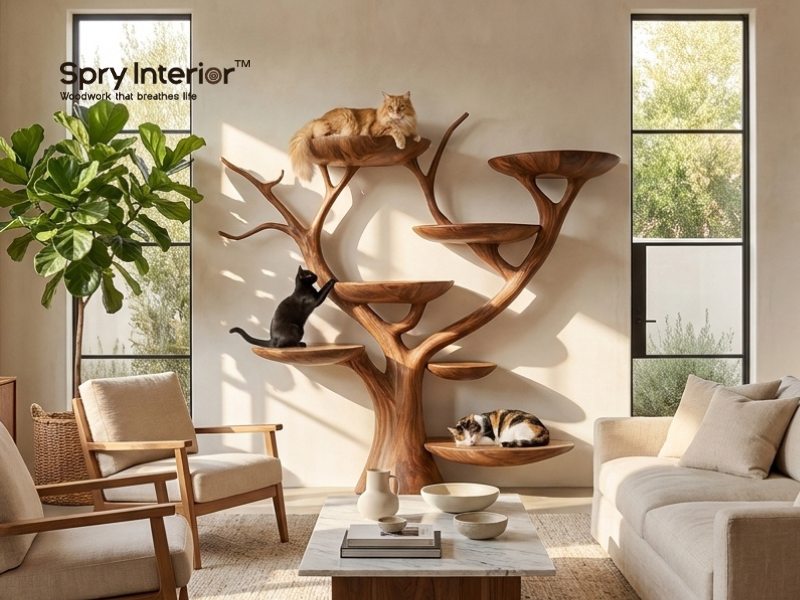
A cat tree that looks like a tree can become a sculptural focal point instead of an object homeowners feel compelled to hide. Organic branches, natural wood grain, irregular platforms, and leaf-inspired cushions can create a playful woodland appearance while maintaining a sophisticated presence.
This style is especially effective in living rooms with plants, wood furniture, neutral upholstery, and nature-inspired decor. The tree-like silhouette introduces movement and softness into spaces dominated by rectangular furniture and straight architectural lines.
The design should still prioritize feline usability. Decorative branches must be positioned at practical climbing distances, and the most visually dramatic elements should not compromise balance or platform size.
Coordinate the Tree With Your Existing Decor
A modern wooden cat tree can complement conteporary, organic-modern, Japandi, bohemian, or transitional interiors when its finish relates to the surrounding furniture. Light wood supports airy spaces, while rich brown tones create warmth and contrast in neutral rooms.

The cat tree does not need to match every wood finish exactly. A room often feels more natural when it includes several complementary tones. Repeating the tree’s color through a coffee table, picture frame, planter, or bookshelf can create subtle cohesion.
Keep the area around the structure relatively uncluttered. Too many decorative objects may compete with its silhouette and create hazards when the cat jumps between surfaces.
4. Why Choose SpryInterior for a Large Wooden Cat Tree?
A Balance of Pet Function and Sculptural Design
SpryInterior focuses on cat furniture that can contribute to the interior rather than simply occupy space. A cat tree tower design offers cats multiple opportunities to climb, scratch, observe, and rest while giving homeowners a distinctive piece with natural character.
This balance matters because cat furniture is often placed in the most frequently used areas of the home. When the structure is visually appealing, owners are more comfortable positioning it near windows, sofas, and gathering spaces where cats are most likely to use it.
An attractive design should never replace practical considerations. The best option combines a stable base, accessible platforms, appropriate materials, and forms that support real feline movement.
Reasons to Consider SpryInterior
- Sculptural silhouettes create a furniture-like appearance.
- Natural wood tones complement many American interiors.
- Multiple platforms support climbing and resting.
- Tree-inspired forms add organic movement to the room.
- Integrated scratching areas support healthy behavior.
- A substantial structure can accommodate active cats.
- Distinctive design reduces the need to hide pet furniture.
Choosing a tree that works visually and functionally can make the purchase feel more worthwhile. Instead of replacing the structure frequently as tastes change, homeowners can select a piece designed to remain part of the room.
A More Intentional Choice for Shared Spaces
Cat furniture affects both the pet and the people living with it. A thoughtfully designed tree gives cats their own territory while preserving the comfort and appearance of the home.
SpryInterior can be especially appealing to owners who want pet furniture to feel warm, artistic, and connected to natural materials. A well-positioned tree may even reduce unwanted climbing on bookcases, curtains, or kitchen surfaces by offering a more attractive elevated alternative.
The result is a shared environment that respects feline instincts without requiring homeowners to compromise their interior style.

Leave a comment
This site is protected by hCaptcha and the hCaptcha Privacy Policy and Terms of Service apply.