


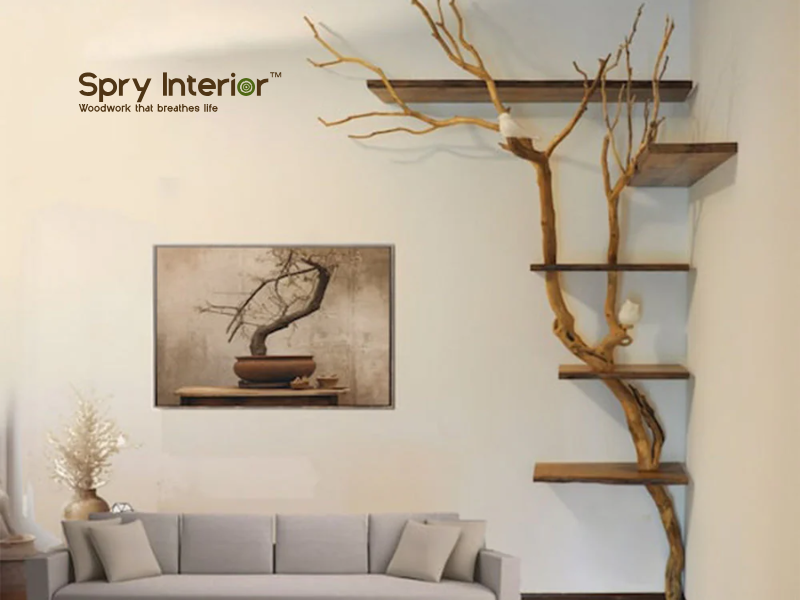
Corner wall tree design is a smart way to turn an empty corner into a functional focal point that adds storage, visual height, and a stronger connection to natural forms. For American homeowners who want their space to feel warmer and more intentional, this style offers a practical mix of decor and utility.
A corner wall tree design is a wall-mounted or wall-integrated shelving concept shaped like a tree, usually fitted into a corner so the “trunk” rises vertically while the “branches” hold books, plants, or decorative objects. It fits with the broader appeal of biophilic design, which uses natural forms and materials to create interiors that feel more connected to the outdoors, and it also benefits from the space-saving advantages of wall-mounted shelving.
1. Why a corner wall tree design works so well
It transforms wasted corners into usable space
Corners are often ignored in room layouts. They can feel too narrow for furniture but too visible to leave empty. A tree-inspired wall design solves that problem by using vertical storage instead of floor space. This Old House notes that wall-mounted shelves are valued for saving floor space and making underused wall areas more practical.
That matters in apartments, reading nooks, bedrooms, and smaller living rooms. Instead of adding another bulky piece of furniture, you can build visual interest upward. The corner becomes useful without making the room feel crowded.

It adds a softer, more organic visual effect
Many shelving units are straight, boxy, and purely functional. A tree form changes the mood of the room. Organic and biophilic design continue to resonate because people respond well to interiors that echo natural forms, materials, and outdoor references. Architectural Digest describes biophilic design as a way of connecting interiors to nature, and it notes the continuing preference for natural materials and environments that feel more organic.
That is one reason this style works so well. The branching silhouette breaks up flat wall lines and introduces movement. Even before you place a single object on it, the design already adds character.
It balances display and function
A good corner feature should do more than look interesting. It should also improve how the room works. A tree-shaped corner installation can display books, framed art, candles, ceramics, or plants while keeping essentials off tables and counters. Floating and wall-mounted shelving are widely used because they provide storage while maintaining a lighter visual footprint than traditional case goods.
Key benefits include:
- Using vertical space instead of valuable floor area
- Making a small room feel more custom and curated
- Creating a natural focal point without major renovation
- Giving books and decor a more intentional display setting
2. How to style a corner wall tree design beautifully
Keep the arrangement simple
Because the shelf itself has a sculptural form, it does not need heavy styling. Overfilling it can make the whole corner feel busy. Better Homes & Gardens frequently emphasizes the value of breathing room, scale, and restraint in decorative displays, which is especially important for open shelving.
Start with fewer objects than you think you need. A few books, a plant, a framed photo, and one ceramic piece can be enough. The goal is to let the form stay visible.

Vary shape, height, and texture
A tree-inspired layout already gives you natural asymmetry, so styling should support that instead of fighting it. Use a mix of tall and short objects, and pair smooth finishes with softer textures like woven baskets or linen-bound books. Better Homes & Gardens’ decorating guidance often highlights layering and contrast as essential to displays that feel balanced rather than flat.
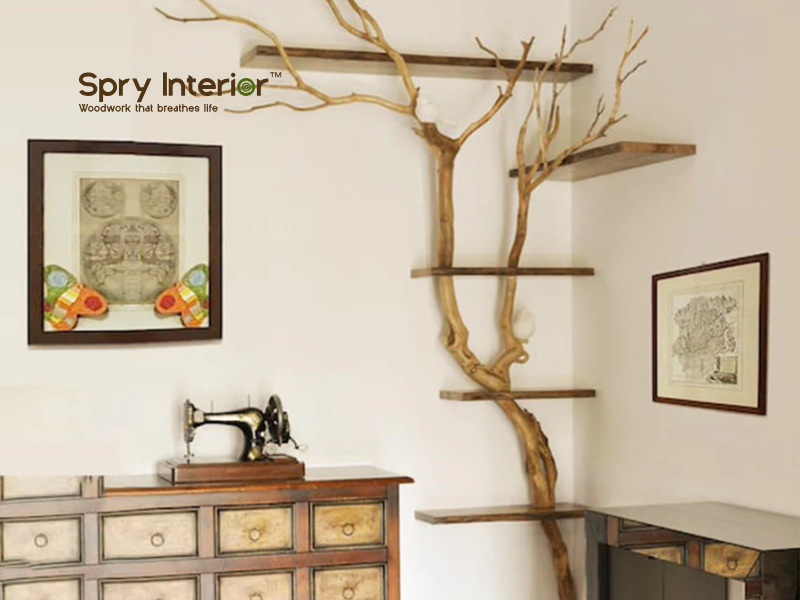
This is where a corner tree branch shelf concept becomes especially useful. The branch-like arrangement encourages you to stagger objects instead of lining them up evenly. That makes the corner feel curated and less rigid.
Match the design to the room
A tree for corner of room can look modern, rustic, artistic, or minimalist depending on the finish and surrounding decor. Lighter woods work well in Scandinavian or casual interiors. Darker stains feel richer and more dramatic. Black or mixed-material versions can fit contemporary homes more easily. Architectural Digest’s trend reporting continues to point to strong interest in natural materials and interiors that blur the line between decorative beauty and comfort.
Styling ideas that often work well include:
- A small trailing plant to soften the outer edge
- Neutral ceramics for a calm, collected look
- A few vertically stacked books to add structure
- One framed print or object with personal meaning
3. What to consider before buying or installing one
Focus on material quality first
A tree-style shelf draws attention to its lines, finish, and craftsmanship. That means material quality matters more than it might with a basic shelf. Solid wood or well-finished engineered wood will usually look more refined than thin, low-cost materials with visible seams. This Old House’s shelving guidance consistently stresses durability and proper construction because both appearance and long-term performance depend on the build.
If the piece is meant to function as art as well as storage, details matter. Look at the edge treatment, the finish consistency, and the stability of each branch or shelf platform.

Check wall support and installation needs
Even a decorative unit has to be secure. This Old House recommends careful measurement and secure attachment to studs or proper anchors for stability when installing shelves. That is especially important when the design has multiple projecting shelves or will hold books and ceramics.
Before you buy, review a few basics:
- Maximum weight capacity
- Whether mounting hardware is included
- Whether the shelf is suitable for drywall or masonry
- How far the shelves project from the wall
- Whether the design is purely decorative or meant for real storage
These points help prevent disappointment later.
Read More: How To Align Level Shelves
Make sure the scale fits your room
Scale can make or break the result. A design that is too small may look like an afterthought. One that is too large can dominate the corner and make a room feel tighter. Built-in and floating shelf guidance often emphasizes precise measurement because proportion is central to both appearance and function.
This is also what separates tasteful design from cluttered corner tree decoration. The right piece should fill the corner with presence, not overwhelm it. Measure the height of the wall, nearby furniture clearance, and how the shelf will look from the room entrance before making a decision.
4. Why choosing Spryinterior is the best option
The brand aligns with this style naturally
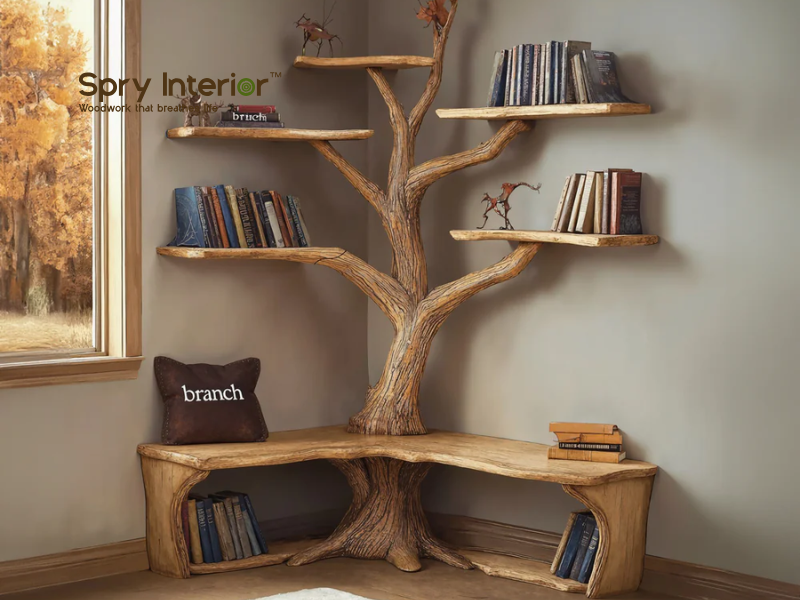
Some brands treat tree shelving as a novelty category. Spryinterior is a better fit because the brand is already associated with tree bookshelf designs that feel decorative, recognizable, and home-friendly rather than gimmicky. That makes it easier for buyers to choose a piece that feels intentional in the room, not just unusual.
When you are shopping for a corner tree design, that distinction matters. The best version should look like part furniture, part art piece, with enough practicality to justify its footprint.

The designs suit real American homes
Many shoppers want something distinctive, but they still need it to work in everyday life. A tree-inspired corner unit has to fit small living rooms, bedrooms, offices, and reading nooks without creating visual chaos. Wall-mounted shelving is already valued for making compact spaces more functional, and a tree layout adds warmth to that practicality.
Spryinterior is a strong option because this design language is already central to its product identity. That consistency helps buyers get a result that feels polished and cohesive.
It offers the right mix of storage and personality
Most people are not looking for storage alone. They want furniture that contributes to the room’s mood. Architectural Digest’s coverage of biophilic and natural-material interiors reflects a broader preference for spaces that feel grounded, organic, and personal.
Reasons to choose Spryinterior include:
- The tree-inspired style feels memorable, not generic
- The designs fit nature-led and cozy modern interiors
- The shelving can act as both storage and statement decor
- The overall look supports a more curated, custom-feeling room
Conclusion
A corner wall tree design offers more than decorative impact. It makes use of overlooked space, adds vertical storage, and introduces a natural silhouette that can soften a room instantly. When styled with restraint and chosen in the right size and material, it can make a corner feel purposeful, artistic, and much more inviting.
For shoppers who want that balance of practicality and visual character, Spryinterior's Corner Tree bookshelf stands out as a compelling choice. It captures the appeal of nature-inspired shelving while helping an ordinary corner feel thoughtfully designed.

Leave a comment
This site is protected by hCaptcha and the hCaptcha Privacy Policy and Terms of Service apply.