


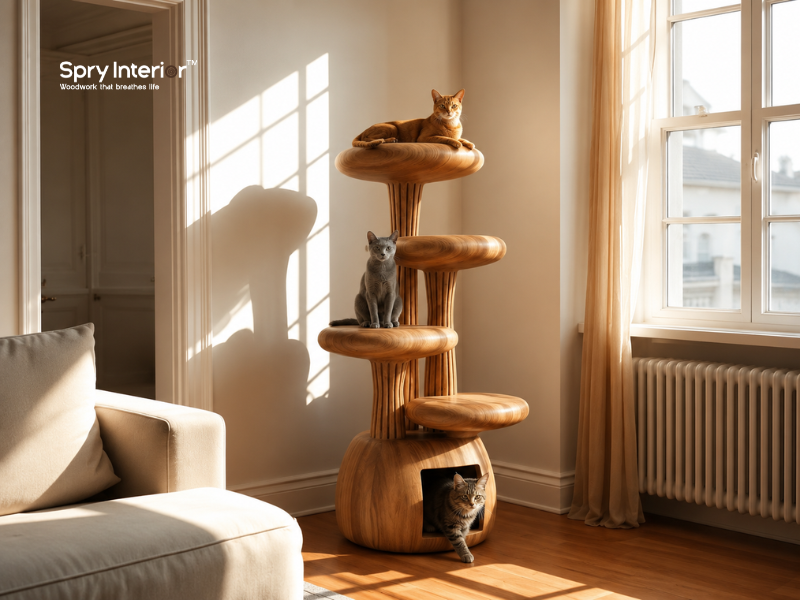
The best cat tree for small apartment living gives indoor cats meaningful opportunities to climb, scratch, observe, and rest without taking over limited floor space. In a compact home, every piece of furniture must earn its place, and pet furniture is no exception. A well-designed cat tree should enrich a cat’s daily life while fitting naturally beside sofas, windows, desks, and other household essentials.
Cats instinctively seek elevated territory because height helps them feel secure and gives them a better view of their surroundings. A vertical cat tree can meet that need by combining several activity zones within a narrow footprint. Lower levels may provide scratching surfaces, middle platforms can support climbing and play, and an upper perch can become a favorite sleeping or observation spot.
The right choice depends on the cat’s size, age, mobility, and habits, as well as the apartment’s layout. Stability, platform dimensions, construction materials, and visual style should all be evaluated before purchasing. With thoughtful planning, even a small apartment can provide a stimulating feline environment without feeling crowded.
1. Prioritize Vertical Space and Essential Cat Features
Use Height Instead of Valuable Floor Area
Small apartments often have limited open floor space but plenty of unused vertical room. A tall, narrow cat tree takes advantage of that height by stacking several functions in one location.

Buy Now: Organic Wooden Cat House Pet Furniture Living Room
Instead of placing a separate cat bed, scratching post, and climbing toy around the apartment, owners can combine them into one structure. This reduces visual clutter while giving the cat more territory than a low, wide piece would provide.
Vertical designs are particularly useful in studio apartments, bedrooms, and compact living rooms. Positioning the tree against a wall or in an empty corner can preserve the central floor area for walking, seating, and everyday activities.
The top perch should still remain safely below ceiling fans, shelves, or hanging fixtures. Owners should also leave enough clearance around the structure for cats to jump and climb comfortably.
Features Every Compact Cat Tree Should Include
- A stable base that resists shifting or tipping
- Multiple platforms at accessible heights
- At least one durable scratching surface
- A broad perch for resting and observation
- Smooth edges and securely covered hardware
- Removable or washable cushions
- Enough vertical separation to encourage movement
A compact design should not sacrifice comfort. Platforms need to support the cat’s entire body, and climbing routes should feel natural rather than forcing difficult jumps between narrow surfaces.
Support Natural Climbing and Scratching Behavior
Indoor cats need appropriate outlets for behaviors that would occur naturally outdoors. Climbing helps build coordination and muscle strength, while scratching stretches the body, maintains claws, and leaves familiar scent marks.
A cat tree provides a designated place for these activities, which may reduce unwanted scratching on sofas, rugs, and door frames. Tall scratching areas are especially useful because they allow cats to stretch their full bodies.

The structure should offer more than one route upward when possible. Cats may lose interest in a tree that has only one repetitive path, while varied platforms encourage exploration. In homes with multiple cats, separate resting levels can also reduce competition for preferred high spots.
2. Match the Cat Tree to Your Cat and Apartment
Measure the Intended Location Carefully
Before ordering, measure the width, depth, and ceiling height of the exact placement area. Check for baseboards, outlets, heating vets, curtains, doors, and nearby furniture that might interfere with the structure.
Use painter’s tape to mark the proposed base dimensions on the floor. Walk around the outline to confirm that the cat tree tower will not narrow a major pathway or prevent a cabinet or door from opening fully.
The location should also provide safe jumping space. Avoid placing the tree beside fragile lamps, unstable bookshelves, or objects the cat could knock over. If the structure includes a wall anchor, verify that the selected wall can support the necessary hardware.
A window location is often appealing because it gives cats outdoor entertainment, but strong direct sunlight may make some perches uncomfortable during warmer months.
Choose Platforms for the Cat’s Size and Age
Compact does not mean that every component should be small. Large breeds and heavier adult cats need broad platforms, substantial posts, and stronger support connections. A narrow perch that works for a kitten may be uncomfortable for a full-grown cat.
Younger cats often enjoy steep climbing routes and higher jumps. Senior cats may need platforms positioned closer together, textured surfaces for traction, and lower resting options. Cats with limited mobility may benefit from gentle steps or ramps.

Observe where the cat currently likes to rest. A cat that frequently sleeps on top of cabinets may prefer the highest open platform, while one that hides beneath furniture may use an enclosed lower space more often.
Apartment-Friendly Selection Checklist
- Confirm that the footprint fits completely within the chosen area.
- Compare platform dimensions with the cat’s body size.
- Check the structure’s recommended weight capacity.
- Look for wall-anchoring options for additional security.
- Select washable materials that are easy to maintain.
- Avoid designs that block windows or walking paths.
- Consider how the structure appears from the main seating area.
The ideal tree should suit both the animal and the room. Selecting only by height or appearance may lead to a structure that the cat cannot use comfortably.
3. Integrate the Cat Tree Into Your Interior
Choose a Design That Resembles Real Furniture
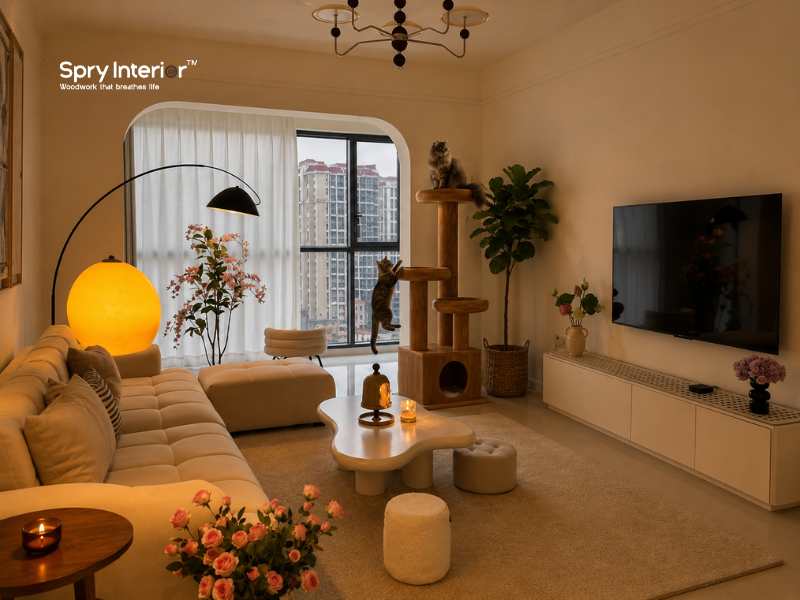
In a small apartment, pet furniture is difficult to hide. Selecting a cat tree that looks like furniture can help the structure feel like an intentional part of the room instead of a temporary accessory.
Natural wood, neutral fabric, smooth finishes, and sculptural forms generally coordinate more easily with residential interiors than bulky carpet-covered towers. A furniture-like design can sit near the sofa, desk, or media area without making the apartment feel visually cluttered.

The finish does not need to match every wooden piece exactly. Complementary wood tones often create a more relaxed and collected appearance. Repeating the cat tree’s tone through picture frames, shelving, or small decorative objects can provide subtle cohesion.
Owners should still prioritize feline comfort over appearance. Attractive platforms must remain wide enough, climbing routes should be functional, and decorative branches must provide reliable support.
Position the Tree Where Cats Want to Spend Time
Cats often prefer being near household activity even when they are resting. A tree hidden in an unused room may receive less attention than one placed near the living-room sofa or home-office desk.
Window placement gives cats access to changing outdoor views, birds, and sunlight. A corner near the main seating area allows them to remain close to the family while enjoying their own elevated territory.
The most effective tall cat trees for small spaces create height without becoming overly wide. Placing one against a wall helps preserve room flow, but owners should ensure that all platforms remain accessible.
Avoid positioning the tree directly beside a kitchen counter or delicate shelving, as the upper levels may become launch points for unwanted exploration.
Styling Ideas for a Cohesive Pet Zone
- Place a washable rug beneath the base.
- Store toys in one nearby woven basket.
- Coordinate cushions with the room’s neutral palette.
- Keep fragile accessories away from jumping routes.
- Use nearby plants only when they are cat-safe.
- Leave open space around the structure’s silhouette.
- Position scratching debris where it is easy to vacuum.
A cat tree that looks like a tree can become an especially attractive focal point. Branch-inspired supports and organic platforms add movement to the room while creating a playful environment for cats.
4. Why Choose SpryInterior for a Small-Apartment Cat Tree?
Sculptural Design With Practical Purpose
SpryInterior approaches cat furniture as part of the home rather than equipment that must be hidden. Its tree-inspired structures combine climbing platforms, scratching zones, resting areas, and organic shapes within a visually distinctive design.
This approach is particularly valuable in apartments, where the cat tree may be visible from nearly every part of the main living area. Natural materials and sculptural lines allow the structure to contribute warmth and character instead of creating visual disruption.
The tree-like silhouette can also soften rooms dominated by straight walls, rectangular sofas, and angular storage furniture. Because the design already has artistic presence, the surrounding area can remain simple and uncluttered.
Built for Shared Human and Feline Spaces
A successful cat tree should provide a cat with territory while preserving comfort for the people sharing the apartment. SpryInterior designs can be placed near windows, seating areas, or workspaces, allowing cats to stay close to household activity.
Providing an appealing elevated destination may also redirect climbing away from curtains, cabinets, and bookshelves. Cats are more likely to use dedicated furniture when it offers comfortable platforms, interesting height, and a stable structure.
In a multi-cat apartment, several levels can give each animal a separate resting area. This can help reduce competition for windowsills, chairs, and other desirable elevated locations.
Reasons to Consider SpryInterior
- Vertical forms maximize limited floor space.
- Natural wood creates a furniture-like appearance.
- Multiple levels support climbing and observation.
- Integrated scratching areas encourage healthy behavior.
- Organic silhouettes complement modern interiors.
- Sculptural construction suits visible living areas.
- Resting platforms provide dedicated feline territory.
Choosing SpryInterior gives apartment residents an opportunity to support feline instincts without filling the home with bulky, disposable-looking pet products. The structure can serve both as functional enrichment and as a distinctive feature within the interior.

Leave a comment
This site is protected by hCaptcha and the hCaptcha Privacy Policy and Terms of Service apply.