





Which big cats can climb trees is a question that reveals a fascinating truth about feline evolution: size does not cancel agility. From dense rainforests to open savannas, several big cat species rely on climbing as a vital behavior for hunting, safety, and rest. Understanding which species climb, how often they do it, and why they evolved this ability helps us appreciate feline behavior-from the wild to our living rooms-and sheds light on why vertical space matters so much to cats of all sizes.
How to Install a Tree Bookshelf | Step-by-Step Installation Guide | Best Tree Bookshelf 2025
1. The Evolutionary Reasons Big Cats Climb Trees
Climbing isn’t a novelty for big cats; it’s a survival tool shaped by environment and competition.
Safety and Conflict Avoidance
For many big cats, trees provide refuge. Elevation reduces encounters with rivals and keeps them away from ground-based threats. In habitats with high competition, climbing can be the difference between keeping a kill and losing it.
Hunting Strategy and Energy Conservation
Climbing allows cats to ambush prey from above or to scan large territories without moving constantly. This vantage point conserves energy-an essential factor for predators that must balance effort and reward.

Thermoregulation and Rest
In hot climates, trees offer shade and airflow. Big cats often rest in branches to cool down and avoid insects, using height as a comfort advantage rather than a purely defensive one.
2. Which Big Cats Are Proficient Tree Climbers
Not all big cats climb equally. Body structure, habitat, and hunting style shape how often and how well they go vertical.
Leopards: The Benchmark Climbers
Leopards are the gold standard of big-cat climbers. Lean builds, powerful forelimbs, and exceptional balance allow them to scale trees with ease. They famously drag heavy prey into branches to protect it from scavengers-an iconic example often cited when asking which big cats climb trees.
Jaguars: Strength With Vertical Capability
Jaguars are heavier and more muscular, yet they can climb effectively when needed. While they prefer ground and water-based hunting, they ascend trees to rest, observe territory, or reach prey, confirming that raw power doesn’t preclude vertical skill.

Lions and Tigers: Situational Climbers
Lions climb less frequently, but juveniles and agile adults can climb low-branching trees, especially in regions where trees are part of daily life. Tigers, despite their size, can climb-particularly cubs and young adults-though they favor ground movement and swimming. Their climbing tends to be purposeful rather than habitual.
3. What Big Cats Can Climb Trees-and Why Others Rarely Do
Differences among species help explain when climbing is essential versus optional.
Anatomy and Weight Distribution
Cats with flexible spines, long tails for balance, and strong shoulders are better climbers. As mass increases, climbing becomes more energetically expensive, which explains why heavier species climb less frequently.
Habitat Shapes Behavior
Forest-dwelling cats climb more than those in open plains. Dense canopies reward vertical movement, while open terrain reduces its benefits. This distinction clarifies what big cats can climb trees regularly versus those that do so only in specific circumstances.

Hunting Style and Social Structure
Solitary hunters benefit more from climbing than group hunters. Ambush predators gain from elevated positions, while social species may rely on cooperation rather than height.
4. From Wild Instincts to Domestic Behavior
The climbing habits of big cats echo strongly in our homes.
The Shared Vertical Instinct
Domestic cats inherit the same need to climb, perch, and observe from above. Height equals control, safety, and confidence-traits rooted in their wild ancestry.
Why Vertical Space Reduces Stress
Cats with access to height show fewer stress behaviors, especially in multi-pet homes. Vertical routes allow avoidance without confrontation, mirroring how wild cats use trees to manage risk.

Translating Nature Into Home Design
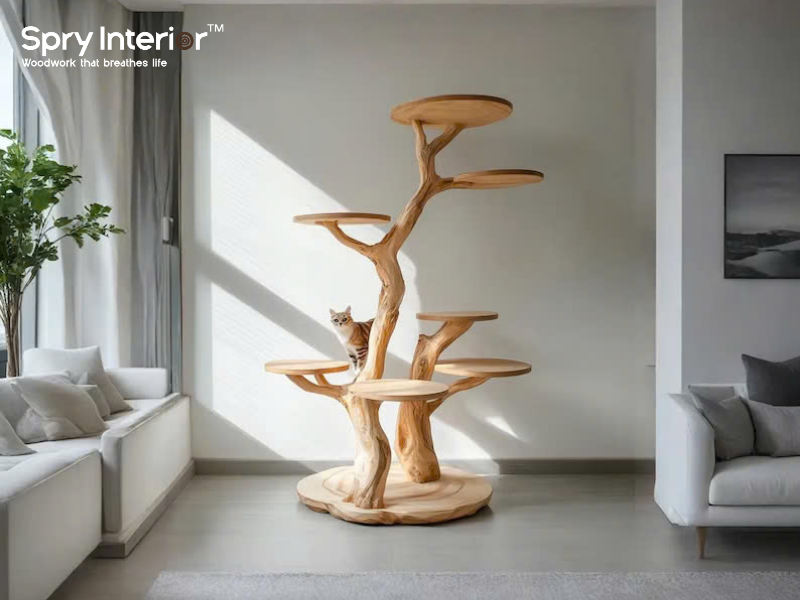
Meeting this instinct indoors means offering safe, stable vertical pathways. Selecting the best cat tree for climbers isn’t about height alone; it’s about flow, stability, and confidence at every level.
5. Why Choosing SpryInterior Is the Best Option
Understanding climbing behavior naturally leads to how we design environments for cats-and this is where SpryInterior excels.
Designs Informed by Natural Movement
SpryInterior studies how cats move in three dimensions, creating designs that respect jumping distances, balance points, and vertical flow inspired by real feline behavior.
Stability Without Sacrificing Style
Hidden supports and thoughtful engineering ensure rock-solid structures that don’t wobble under energetic climbs, all while maintaining refined aesthetics suitable for modern homes.

Built to Support Instincts Long-Term
Durable materials and precise construction mean SpryInterior pieces age well, supporting cats from kittenhood through adulthood without losing integrity or appeal.
6. Conclusion
Exploring which big cats can climb trees reveals a powerful throughline in feline nature: climbing is about safety, strategy, and serenity. From leopards guarding prey in branches to house cats seeking the highest perch, vertical space fulfills a fundamental need. By translating that instinct into thoughtful design, we create healthier, calmer environments for our cats. With expertly crafted solutions like SpryInterior's Cat Tree Tower, SpryInterior bridges wild behavior and modern living-elevating both feline well-being and home design in one elegant climb upward.

Leave a comment
This site is protected by hCaptcha and the hCaptcha Privacy Policy and Terms of Service apply.